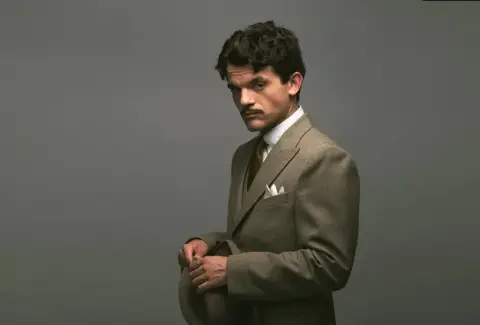
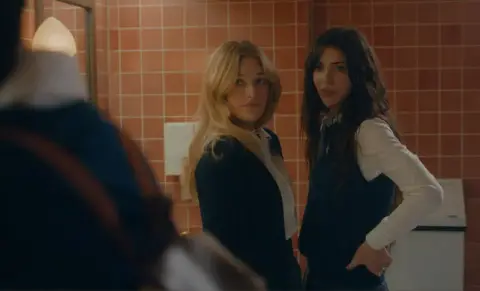
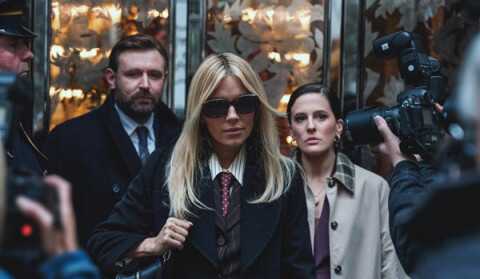
Hercule Poirot is coming back. Hercule – a six-part BBC One and BritBox drama from Mammoth Screen and Agatha Christie Productions – has commenced filming in Liverpool, with Edward Bluemel taking on one of the most scrutinised roles in British television as a young Poirot navigating his earliest cases. Read here where Hercule was filmed.
The series is described as an intimate study of Hercule Poirot the man and an epic portrait of Britain between the wars. It centres around three of Christie's early stories, while introducing Poirot to future friends, allies and one particular nemesis. Written by Benji Walters (Obsession), directed across its six episodes by Jonny Campbell, Chanya Button and Alrick Riley, and produced by Mammoth Screen – whose previous Christie adaptations include And Then There Were None and Murder Is Easy.
Bluemel follows in the footsteps of David Suchet, John Moffatt, Peter Ustinov and Kenneth Branagh – an unenviable but irresistible inheritance. "I feel very lucky to have been trusted with such an iconic character who has been played by so many great actors. I can't wait to continue Hercule's legacy," he said. The ensemble around him includes James D'Arcy, Tamsin Greig, James Nesbitt, Jack Gleeson, Henry Ashton, Calvin Demba, Phil Dunning, Guy Remmers, Rebecca Rittenhouse and Mawaan Rizwan.
Filming began in the summer of 2026 and is continuing through the autumn, with Liverpool serving as the primary filming location throughout. The city’s extraordinary stock of Georgian, Victorian and Edwardian architecture makes it a very credible interwar Britain stand-in.
Liverpool
Film crews set up in Liverpool city centre on August 23, with filming taking place at Exchange Flags – the historic square behind the Town Hall, one of Liverpool's most architecturally distinguished public spaces. Cameras, vans and green screens filled the square, with road closures in place on High Street, just off Dale Street, from 6am until midnight to facilitate filming. Rise brunch café on the square also shut for the day to accommodate the production.
Exchange Flags is a pointed choice. The square – named for the merchant exchange that once stood there – is surrounded by the neoclassical Town Hall on one side and the rear facades of Georgian commercial buildings on the others. So with the character of these building it very much looks like interwar London.